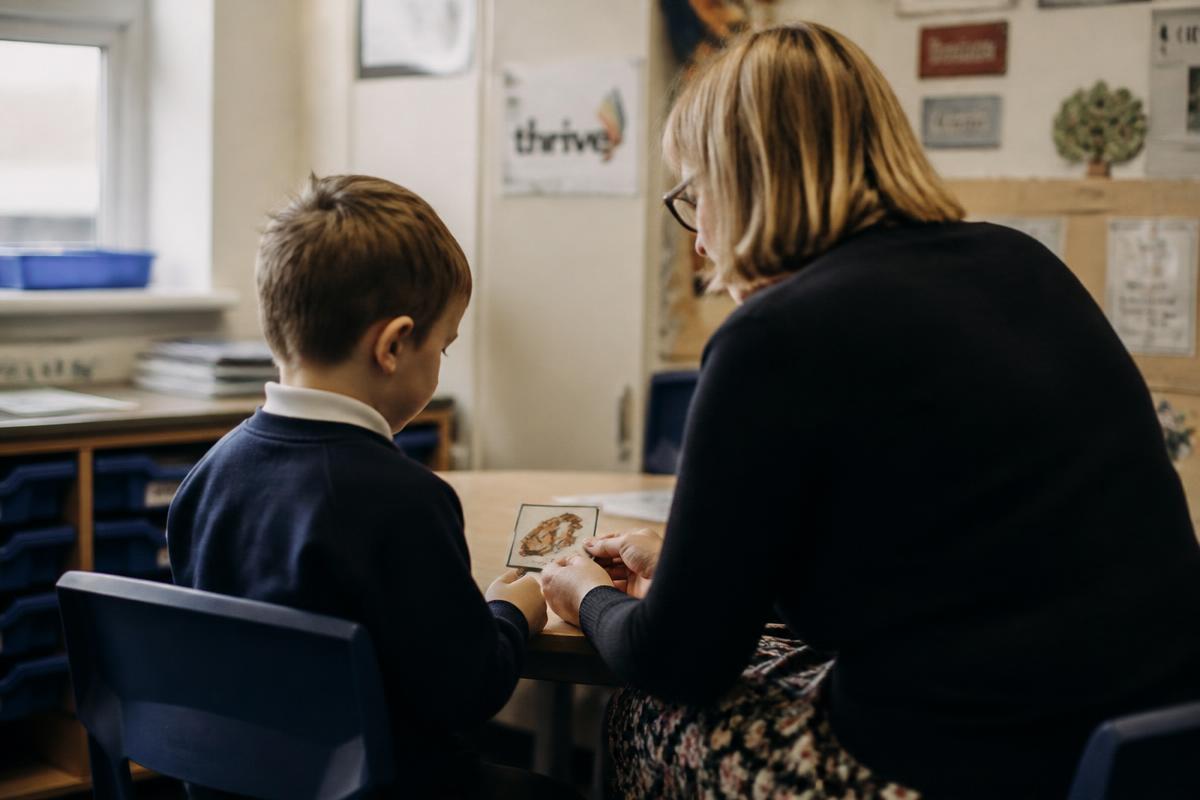

Whole-school implications
How your school designs lessons, resources and routines determines how much noise sits between pupils and the curriculum. A load-aware school is a calmer, more inclusive school — and often a higher-attaining one.

How lesson design shapes what a working memory can carry — and the small design choices that free up thinking for learning.

How your school designs lessons, resources and routines determines how much noise sits between pupils and the curriculum. A load-aware school is a calmer, more inclusive school — and often a higher-attaining one.

The Kind Learner Space has this guide in plain English for families — the same evidence, translated for home.
Open in The Kind Learner SpaceA calm handful of next steps — not a checklist. Follow whichever thread is most useful right now.
A plain-English version parents and carers can read at home — same evidence, warmer language.
Sensory, attention, communication, wellbeing — see how this topic sits alongside the wider picture.
Working memory, attention, executive function and cognitive load — threaded into one guided journey.
Each guide below connects to the one you've just read. We've noted why — so you can follow the thread that matters most to you.

Cognitive load theory rests on working memory limits — the two guides sit alongside one another.

Extraneous load competes with the executive resources children need to plan and monitor their work.

Well-designed lessons protect attention by keeping load within reach.

Reducing load matters most when a child processes at their own pace — it prevents small delays becoming lost learning.

How children make sense of what adults say — and what we can change about the way we communicate so that more children understand, participate and show what they know.
Explore
How children put their thoughts, ideas, needs and experiences into words — and what adults can change so that more children can show what they think and know.
Explore
What it means to really know a word, why word knowledge sits underneath so much classroom learning, and how adults can build it deliberately without turning language into a deficit.
Explore
Being hard to understand is not the same as having less to say. What speech sounds are, how clarity develops at different rates, and how to keep a child fully included while it does.
Explore
Not the ability to stay calm. What emotional regulation actually involves, how it grows through relationships, and what genuinely helps at home and in class — with the strength of the evidence stated plainly.
Explore