
Speech Sounds & Speech Clarity
Being hard to understand is not the same as having less to say. What speech sounds are, how clarity develops at different rates, and how to keep a child fully included while it does.
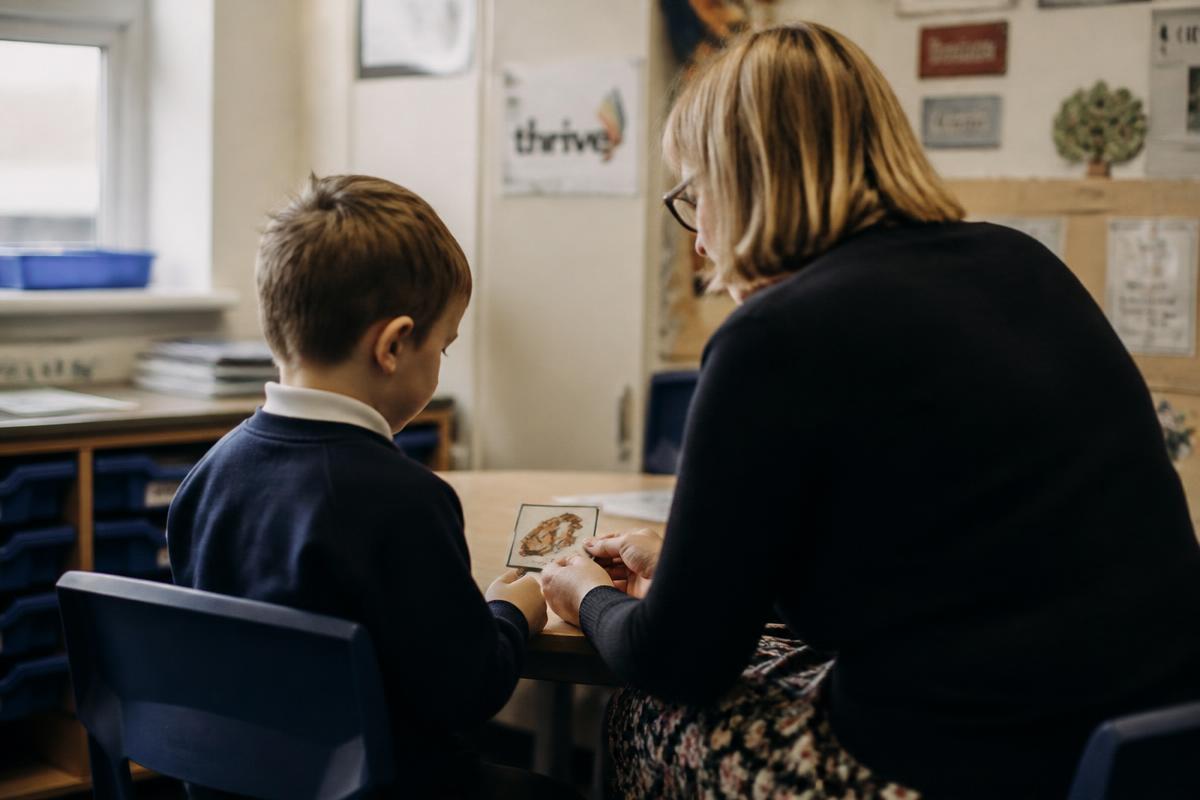
Speech sounds are the individual sounds we use to make words — made by the tongue, lips, teeth, jaw and voice working together very fast, in the right order. They are not letters: 'sheep' has five letters and three sounds. Speech clarity simply means how easily other people understand a child. Children learn sounds gradually and at different rates, with sounds like 'b', 'm' and 'd' arriving early and 'sh', 'ch', 'th', 'r' and clusters often taking until the infant or junior years. Being hard to understand is not a measure of intelligence, understanding, effort or behaviour. What it does affect is how much of a child's thinking other people ever get to hear — which is why the adjustments that matter most are about listening, patience and giving other ways to show what they know.
Everyday things you may see
These are observations, not labels. One on its own means very little; a pattern over time is worth talking about.
- Familiar adults understand them easily; unfamiliar adults often do not.
- The same sound is always swapped or missed out of words.
- Longer words come out shorter — 'nana' for banana.
- They repeat themselves, then give up or say "never mind".
- They talk far less in groups or with visitors than one to one.
- An adult ends up translating for them.
- Spoken work looks weaker than their written, practical or drawn work.
Supporting your child at home
Small, achievable things that make a real difference — no special resources needed.
- Say it back the right way
"Tat!" — "Yes, a cat! A big cat." They hear the correct version without being told they got it wrong.
- Repeat the part you understood
"You went to the …?" narrows what is left and shows you were listening.
- Offer a choice
"Was it the park or the shop?" is easier than asking them to say the whole thing again.
- Never pretend to understand
Nodding along teaches a child that talking to you does not really work. Be honest and ask them to show you.
- Skip the drills
Making a child repeat words rarely changes the sound and usually reduces how much they say.
Five evidence-informed ideas
Practical, realistic and usable in a mainstream classroom tomorrow.
- Model, don't correct
Repeat the message back in full, correct form and carry on with the content. No public correction of sounds.
- Rehearse before the spotlight
Partner talk before whole-class answers makes the first attempt low-stakes.
- Agree the topic first
Knowing what a child is talking about makes unclear speech far easier to follow.
- Offer another route to the same objective
Sorting, diagrams, mini-whiteboards or typed answers, for assessment as well as practice.
- Teach the class to wait
No answering for anyone. Protecting the turn is a class culture job, not the child's job.
What is often assumed — and what the evidence says
Speech is how words come out. Understanding is a separate skill, and many children with unclear speech understand everything said to them.
Phonics teaches the sound–letter code. It does not treat a speech sound difficulty, and clarity will not change because there is more of it.
There is no evidence that growing up with more than one language causes speech difficulties. Sounds absent from English may simply take longer to appear in English.
Many children do — but the ones who need help are hard to spot by watching alone, and asking early costs nothing.
Describe what you hear and when — who understands them, which sounds are affected, whether they have stopped volunteering answers.
If listening conditions, rehearsal and non-spoken response routes are in place and being understood is still a barrier, ask for a review.
NHS children's speech and language therapy assesses speech sounds; in many areas families can self-refer, and school or your GP can confirm the local route. A hearing check is worth doing, especially after ear infections.
Describe what you notice rather than naming a condition. Only a speech and language therapist can assess why a child's speech is unclear.
Go deeper when you want to
The complete professional guide to speech sounds & speech clarity — research, classroom practice and implementation.
OpenSearch the strategy library for immediate, practical classroom ideas.
OpenPlain-English guides, scripts and printable tools for families.
OpenThe mental notepad that lets a child hold information in mind long enough to use it — and the small changes that make the biggest difference.
Planning, flexibility and impulse control — the mental machinery that lets a developing brain get things done.
What we mean by attention, why it wanders, and the classroom conditions that help it hold.