
Transitions
Moving from one thing to the next — between activities, places, people and years. Why change can be so hard for some children, and the calm, predictable preparation that helps.
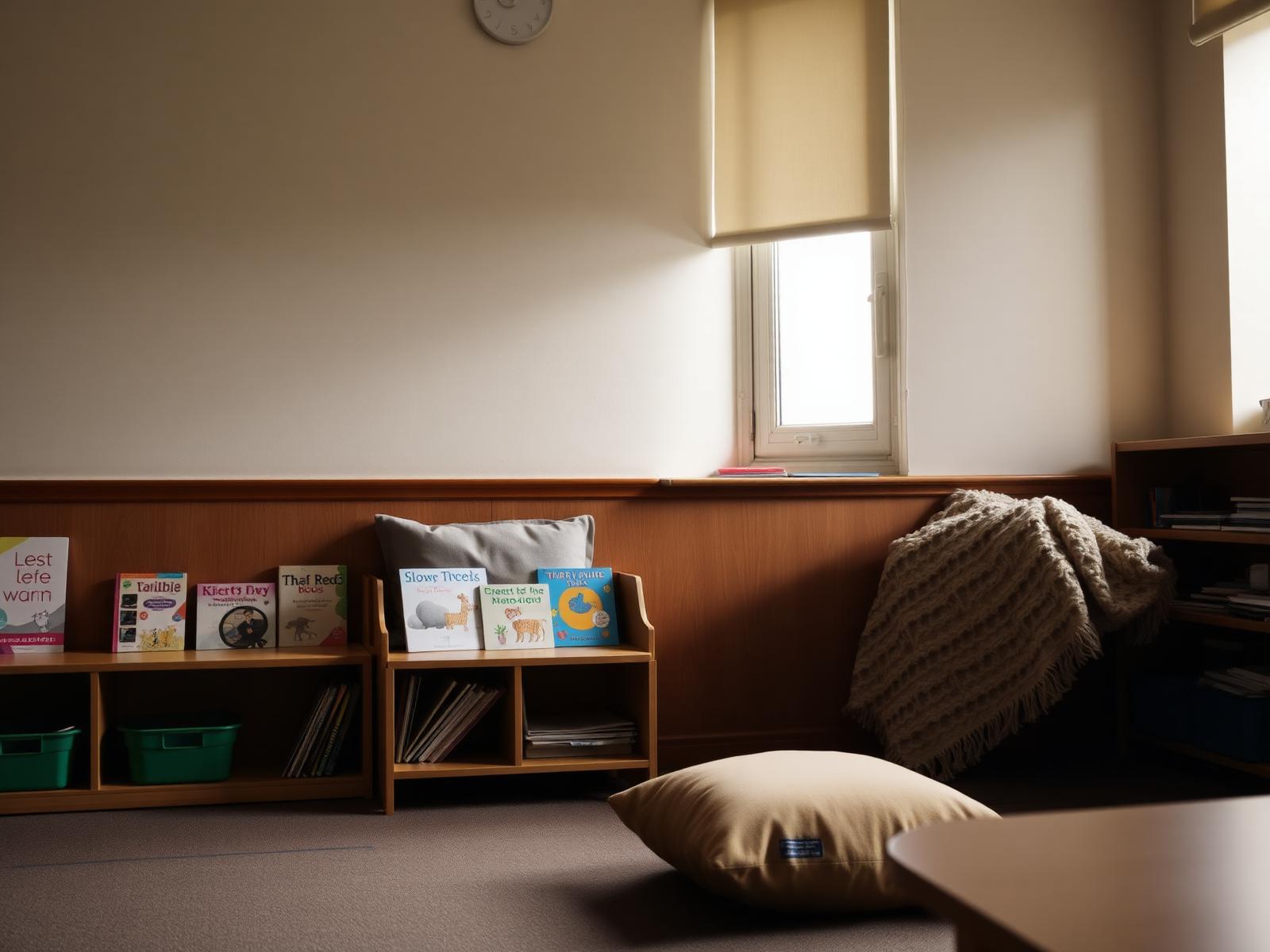
Children face transitions all day: leaving the house, arriving at school, tidying up, playtime, home time, bedtime — and bigger ones like a new class, a new teacher or a new school. Each asks a child to stop something, cope with not quite knowing what comes next, and start again. For some children that is easy; for others it is the hardest part of the day. Not knowing what is coming can feel unsafe, stopping something enjoyable is genuinely hard, and new places bring new noise and people all at once. Preparation, predictability and a trusted adult help many children, and DfE, NICE and UK practice guidance consistently recommend planning transitions rather than reacting to them.
Everyday things you may see
These are observations, not labels. One on its own means very little; a pattern over time is worth talking about.
- Distress when it is time to stop an activity.
- Difficulty at arrival, lining up, playtime or home time.
- Wobbles when there is supply cover or a change of plan.
- Asking repeatedly what is happening next.
- Worry for weeks before a new class or school.
- Exhaustion after days with lots of change.
Supporting your child at home
Small, achievable things that make a real difference — no special resources needed.
- Warn before the change
"Five more minutes, then shoes on" — with a visual timer if it helps.
- Show what comes next
A picture sequence for mornings or bedtime reduces what a child has to hold in mind.
- Give a bridge
Something to carry or do between one thing and the next.
- Prepare for big changes
Photos of the new classroom and teacher, extra visits and stories about starting somewhere new.
- Expect wobbles
The first weeks after a big change are often bumpy. That is normal.
Five evidence-informed ideas
Practical, realistic and usable in a mainstream classroom tomorrow.
- Visual timetable, actually used
Refer to it through the day and update it when plans change.
- Countdown and warning
A consistent signal and time to finish before moving on.
- Teach the routine
Model and practise tidying, lining up and coming in.
- Now and next
A simple card for children who need to see only what is coming.
- A job in the gap
A role during transitions reduces waiting and uncertainty.
What is often assumed — and what the evidence says
Usually they are struggling with the change itself, not trying to win.
Some children do; many cope better with clear preparation and predictability.
They help many children, and cost little to use well.
Notice which transitions are hardest and share what helps with the SENDCO, family and next year's teacher.
Plan enhanced transition — extra visits, a one-page profile, a named adult — for pupils who need it, starting early.
If change causes severe distress most days, the GP or local services may help; for autistic children, NICE recommends anticipating and planning for change.
Go deeper when you want to
The complete professional guide to transitions — research, classroom practice and implementation.
OpenSearch the strategy library for immediate, practical classroom ideas.
OpenPlain-English guides, scripts and printable tools for families.
OpenThe mental notepad that lets a child hold information in mind long enough to use it — and the small changes that make the biggest difference.
Planning, flexibility and impulse control — the mental machinery that lets a developing brain get things done.
What we mean by attention, why it wanders, and the classroom conditions that help it hold.