
Understanding Behaviour
Behaviour is information. This guide looks at what tends to sit underneath it — need, context, relationship, communication, learning — and how to respond in a way that is both understanding and clear.
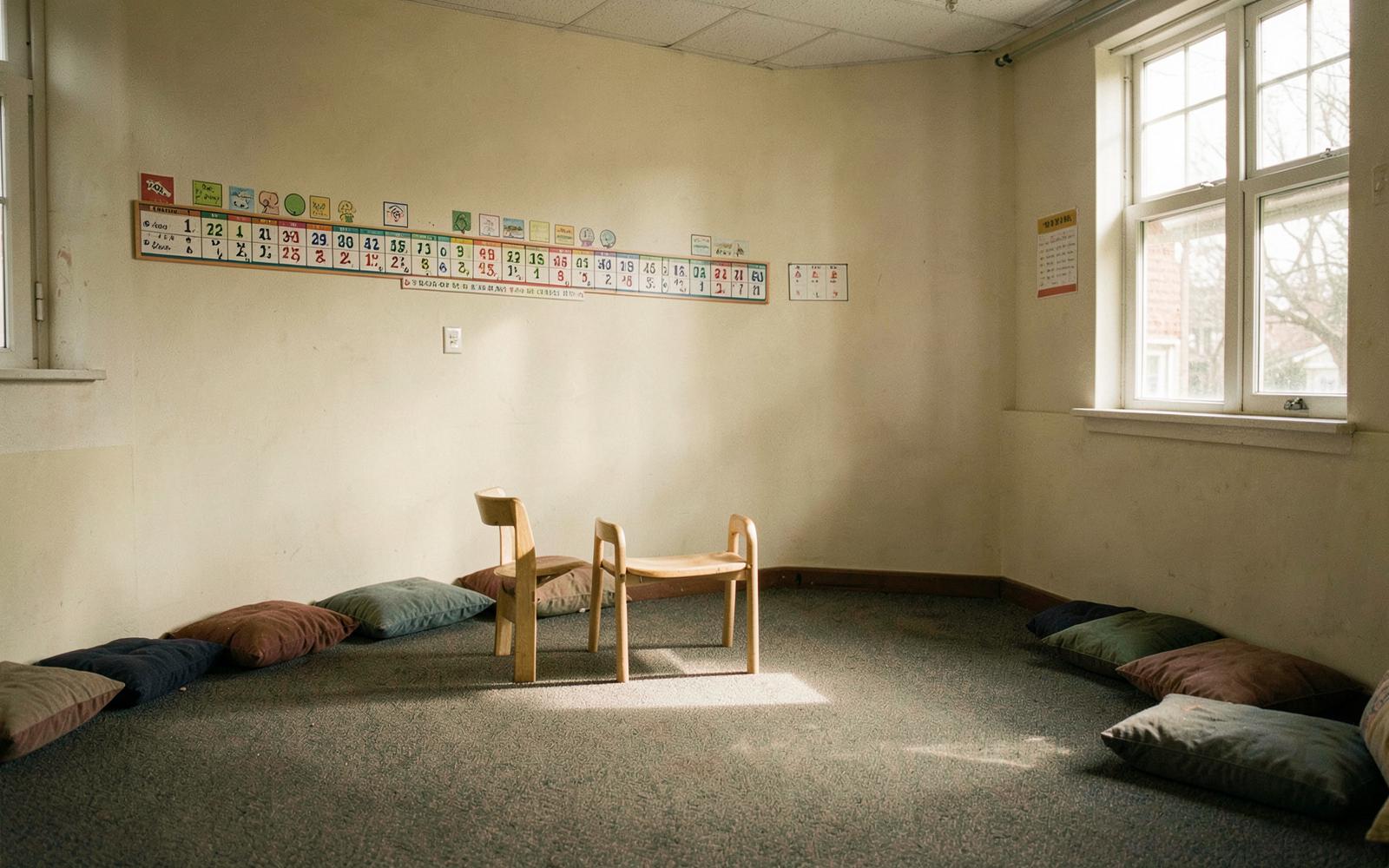
"Behaviour is communication" is one of the most useful ideas in this area and one of the most misused. It means what a child does usually tells you something about what they need, what they can manage, or what has just happened — not that boundaries are unkind. Children generally behave well when they can; when they cannot, something is usually making it harder: tiredness, worry, an overwhelming environment, a demand beyond what they can currently do, a language or memory difficulty, or something that happened at lunchtime. The SEND Code of Practice is explicit that behaviour is not itself a category of need — where behaviour concerns you, look for an underlying cause. The workable position is warm and clear at the same time, not one instead of the other.
Everyday things you may see
These are observations, not labels. One on its own means very little; a pattern over time is worth talking about.
- Difficulty always at the same point — the start of writing, after lunch, the last ten minutes.
- Avoidance that looks like silliness, lost equipment or refusal to begin.
- Apparent non-compliance after long or multi-step instructions.
- Walking out, or sudden anger with little visible build-up.
- Behaviour that is very different with different adults or in different rooms.
- Being fine all day at school and impossible at home.
- Shame afterwards — "I'm the worst" — rather than indifference.
Supporting your child at home
Small, achievable things that make a real difference — no special resources needed.
- Notice the times, not just the incidents
A rough note for a fortnight shows patterns — after school, before homework, at transitions — that no single incident will.
- Fewer, clearer expectations
A small number of things that always apply. Children can meet clear expectations; they cannot meet a shifting list.
- Say very little in the storm
Keep everyone safe, talk later. Nobody learns anything at the peak of a big feeling.
- Separate the child from the behaviour
"That wasn't okay" rather than "You're naughty". Children who believe they are the problem stop trying.
- Catch what goes right
Brief, specific and ordinary — "You waited then, that was hard." The cheapest thing on this list and the first to disappear when a family is exhausted.
Five evidence-informed ideas
Practical, realistic and usable in a mainstream classroom tomorrow.
- Record what came before, not just what happened
Antecedent, task, adult, time of day. Frequency logs describe a problem; context records suggest a change.
- Teach routines, don't just state them
Model, practise, review, re-teach after holidays. Much primary 'behaviour' is an unrehearsed routine.
- Check the task first
Work too hard, too long or too unclear reliably produces avoidance — messing about is easier than being seen not to know.
- Quiet, brief, close, with take-up time
Say what you want rather than what to stop, then step away. The audience is usually why it escalates.
- Always repair before the end of the day
A brief warm reset costs thirty seconds and stops one incident becoming an identity.
What is often assumed — and what the evidence says
Deliberate manipulation is rare at primary age. Far more often the child cannot yet do the thing being asked in that moment.
Looking for the cause is how you work out what would help. Expectations and consequences still stand.
Escalating punishment tends to produce escalating behaviour. Small, immediate, related and calm works better.
Many children hold it together all day and release it at home. That usually means school is costing more than it looks.
The SEND Code of Practice says the opposite — look for the underlying need before deciding.
Bring a fortnight of context notes and the pattern you have found, plus what you have already changed.
Where difficulty persists across settings despite adjustment, or where escalation towards suspension is possible, review the graduated approach and check for unmet learning, language or sensory need.
Your GP can advise where there are health concerns or a possible underlying difficulty. Many local authorities offer early help or parenting support — asking is reasonable, not a failure.
A change in behaviour can also be a safeguarding indicator. If you are worried about a child's safety, follow your school's safeguarding process rather than treating it as a behaviour matter.
Go deeper when you want to
The complete professional guide to understanding behaviour — research, classroom practice and implementation.
OpenSearch the strategy library for immediate, practical classroom ideas.
OpenPlain-English guides, scripts and printable tools for families.
OpenThe mental notepad that lets a child hold information in mind long enough to use it — and the small changes that make the biggest difference.
Planning, flexibility and impulse control — the mental machinery that lets a developing brain get things done.
What we mean by attention, why it wanders, and the classroom conditions that help it hold.