
Understanding Spoken Language
How children make sense of what adults say — and what we can change about the way we communicate so that more children understand, participate and show what they know.
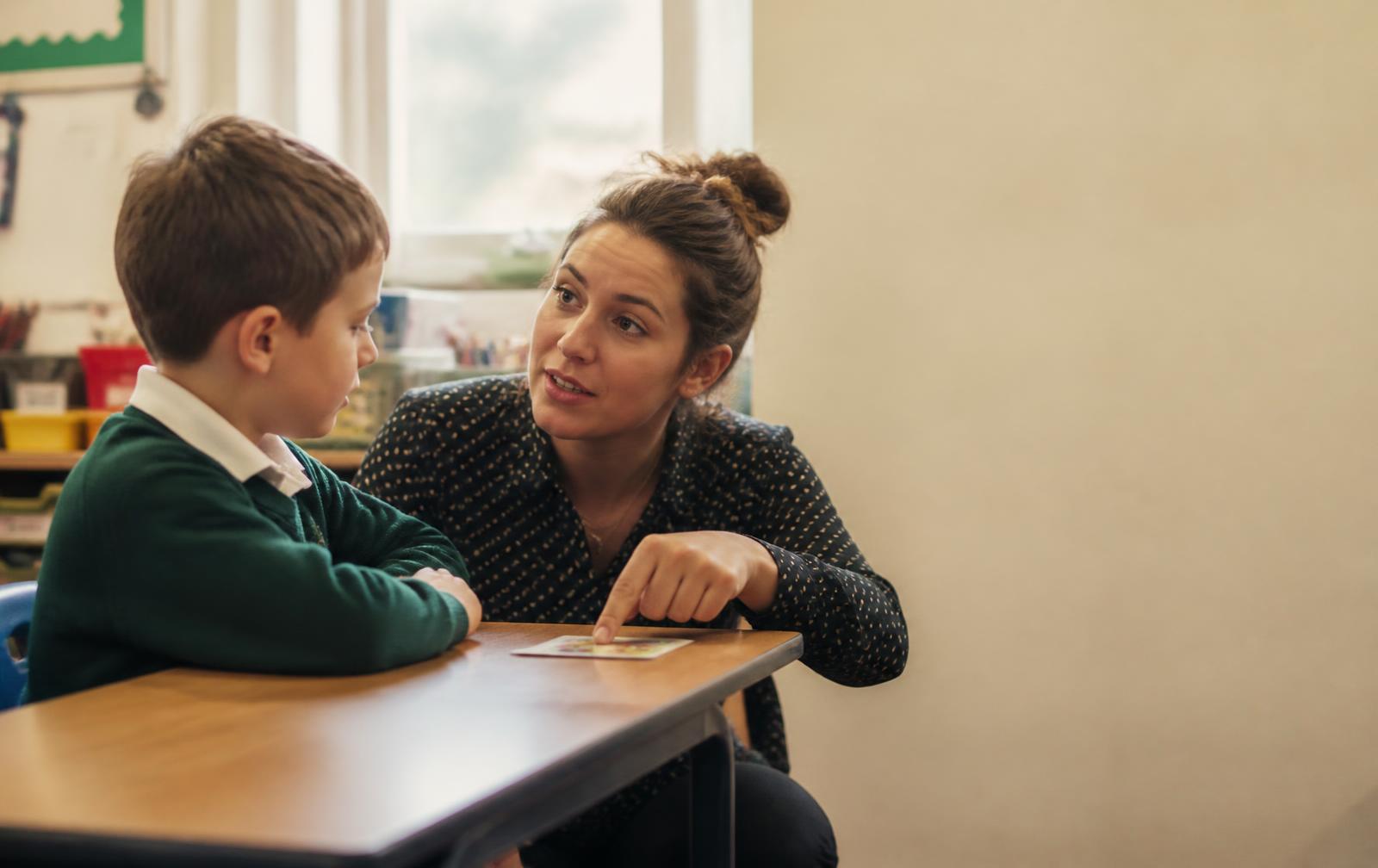
Understanding spoken language is how a child makes sense of the words they hear — instructions, explanations, questions and conversation. It happens fast and invisibly, so difficulties are easy to miss. A child may hear perfectly well and still lose the meaning because the sentence was long, the vocabulary unfamiliar, the pace quick or the room noisy. That matters because school runs on talk: most instructions are spoken, most teaching is explained, and most assessment begins with a question. Children who find understanding hard often watch what everyone else does and copy, which can look like compliance or distraction rather than difficulty. Changing how we talk — shorter sentences, fewer steps, more time, visible support — helps far more children than we expect.
Everyday things you may see
These are observations, not labels. One on its own means very little; a pattern over time is worth talking about.
- Watches other children before starting, to check what to do.
- Follows the first step of an instruction but not the rest.
- Answers a slightly different question from the one asked.
- Says "I don't get it" without being able to say which part.
- Copes better one to one than in a busy classroom.
- Becomes tired, quiet or restless during long explanations.
Supporting your child at home
Small, achievable things that make a real difference — no special resources needed.
- Get close before you speak
Attention first, then the words — from the same room, not the next one.
- Keep instructions short
"Shoes on" then "coat on" works better than a list of four things.
- Give a few seconds
Count to five before repeating. Many children just need more time, not more words.
- Show as well as tell
Pointing, demonstrating or a quick picture routine carries meaning that words alone may not.
- Talk about new words
Everyday conversation, stories and questions build vocabulary more powerfully than any programme.
Five evidence-informed ideas
Practical, realistic and usable in a mainstream classroom tomorrow.
- Say less, and say it clearly
Short sentences, one idea at a time, in the order things will happen.
- Give processing time
Pause after instructions and questions. Silence is where understanding is built.
- Make the words visible
Objects, gestures, pictures and written key words give a second route to meaning.
- Pre-teach vocabulary
New words met before the lesson stop children decoding language and content at once.
- Check understanding properly
Ask a child to explain the task back rather than asking "does everyone understand?"
What is often assumed — and what the evidence says
Many children are listening hard and still losing the meaning. Attention and comprehension are different.
Simplifying and slowing the language helps; volume rarely does.
Expressive fluency can mask difficulties with understanding, especially in confident children.
Some children do catch up, but persistent difficulties need noticing and supporting rather than waiting out.
Describe what happens at home when instructions are given, and ask whether school sees the same pattern with spoken tasks.
If adjustments to language and processing time are in place and understanding remains a barrier, ask the SENDCO to review.
Where difficulties with understanding are persistent and affecting learning or friendships, school may suggest speech and language therapy involvement.
Describe what you notice rather than naming a condition — the description is what professionals find most useful.
Go deeper when you want to
The complete professional guide to understanding spoken language — research, classroom practice and implementation.
OpenSearch the strategy library for immediate, practical classroom ideas.
OpenPlain-English guides, scripts and printable tools for families.
OpenThe mental notepad that lets a child hold information in mind long enough to use it — and the small changes that make the biggest difference.
Planning, flexibility and impulse control — the mental machinery that lets a developing brain get things done.
What we mean by attention, why it wanders, and the classroom conditions that help it hold.