Skip to content
Evidence Guide
15 min read

Relationships & Belonging

Feeling known, safe and wanted is the ground everything else stands on. This guide looks at trusted adults, friendship, inclusion and repair — and at what schools and families can actually change.

Reading time
15 min read
Age range
All primary (EYFS–KS2)
Evidence level
Moderate
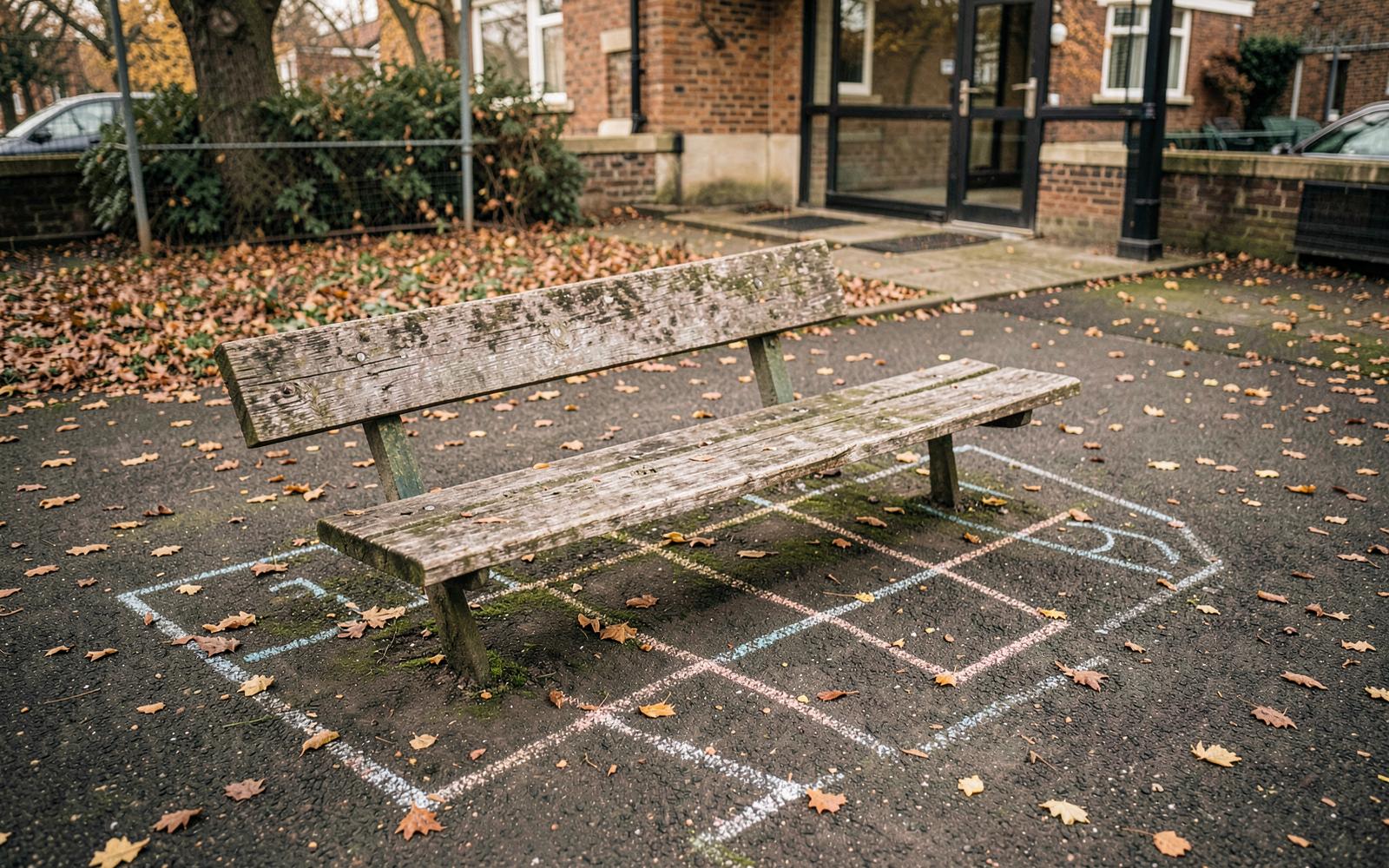
An empty wooden bench beside a primary school playground with a faded chalk hopscotch grid and autumn leaves.
Written for families

Plain English, no jargon. You don't need a teaching background to use this — just read the parts that feel useful and skip the rest. If something raises a question, your child's teacher or SENDCO is the best next step.

OverviewFor parents

What belonging actually means

Belonging is the sense of being known, safe and wanted somewhere. For a primary-aged child that usually comes down to three things: at least one adult who knows them properly, at least one child they are pleased to see, and a place where they know what happens and what is expected of them.

It is not the same as popularity, and it is not the same as being sociable. A quiet child with one steady friend and a teacher who greets them by name may have far more belonging than a child in the middle of a large, shifting group.

One is enough to start

The research on relationships in childhood consistently points to quality over quantity. One reliable friendship and one trusted adult do more than a wide circle of loose acquaintances.

MoreFor parents

How friendships develop in primary school

Friendship changes shape as children grow. In the early years, friends are largely whoever is nearby and doing the same thing — and that can change daily without anyone being upset. In Key Stage 1, children start choosing, and friendships become more stable and more emotionally significant. By Key Stage 2, friendships involve loyalty, secrets, group membership and status, and fallings-out become more painful and more complicated.

Falling out is part of it. Learning to disagree, repair and continue is one of the things primary school is for. Adults who resolve every dispute deprive children of the practice — while adults who never step in leave some children exposed. The judgement is in between.

OverviewFor parents

What you might notice

  • Never mentioning anyone by name, or naming a different child every week.
  • Reluctance to go to clubs, parties or playdates they previously enjoyed.
  • Coming home hungry because they spent lunchtime elsewhere.
  • Describing playtimes as boring, or spending them near an adult.
  • Sunday evenings, Monday mornings or the ends of holidays being noticeably harder.
  • Talking about themselves in a way that has changed — that nobody likes them, that they are annoying.
  • Giving things away, or working very hard to keep a friendship going.
  • Being invited to less than they used to be.
Some children genuinely prefer quiet

Playing alone, needing recovery time, or preferring one friend to a group is a temperament, not a deficit. The question is whether your child is content, or lonely. Those look similar from outside and feel completely different from inside.

OverviewFor parents

What helps at home

Ask better questions

What it is: "Who did you sit with?", "What did you play?", "Who made you laugh?" instead of "Did you have a good day?". Why: specific questions get specific answers, and give you a picture over time.

Listen without fixing

What it is: hearing the whole thing out before offering solutions or taking sides. Why: children stop reporting social difficulty to adults who immediately escalate it.

Small, low-pressure contact outside school

What it is: one child, a short time, a shared activity rather than open-ended play. Why: friendships are easier to build away from the crowd, and structured activity carries the conversation.

Find a place outside school

What it is: a club, a sport, a group built around a genuine interest. Why: a child who is struggling socially in one setting can be entirely fine in another, and one place where they are liked protects a lot.

Rehearse the tricky bits

What it is: practising how to join in, how to ask, how to say no, how to leave a game — briefly, and playfully. Why: these are learnable skills, and rehearsing lowers the cost of trying.

Keep perspective out loud

What it is: naming that friendships shift, that it is not a verdict on them, and that it will not always feel like this. Why: children draw conclusions about themselves quickly, and those conclusions last.

Talk to school early

What it is: describing what you are hearing and asking what they see at playtimes. Why: school can see the playground, and you cannot. Most social difficulties are more fixable at school than at home.

MoreFor parents

Falling out, unkindness and bullying

These are not the same thing, and the response differs. Falling out is a conflict between children of roughly equal standing, and it usually resolves. Unkindness is a one-off or occasional act that needs addressing. Bullying is generally understood as behaviour that is repeated and intended to hurt, where there is an imbalance of power — and it needs a school response under their anti-bullying policy, which every school must have.

If you think it is bullying, put it in writing to the school, with dates and specifics, and ask what they will do and when you will hear back. That is not being difficult; it is what makes the record exist.

Try not to label too fast, in either direction

Calling a single argument bullying can make it harder for school to act on the real thing later. Calling sustained, targeted unkindness "just friendship stuff" leaves a child unprotected. Describe what happened, and how often.

Support at homeFor parents

Things to avoid

  • Contacting another child's parents directly in the heat of the moment.
  • Telling your child to ignore it, if it is persistent.
  • Making friendship a performance target — "Did you make a friend today?".
  • Sharing your own worry about their social life with them.
  • Withdrawing them from everything social to protect them from it.
  • Assuming quiet means unhappy, or that busy means fine.
MoreFor parents

When to seek more help

  • Loneliness lasting weeks rather than days, or your child saying nobody likes them.
  • Not wanting to go to school, or attendance starting to slip.
  • Repeated, targeted unkindness that school has not resolved.
  • Social difficulty alongside communication, language or sensory differences.
  • A marked change in mood, sleep or appetite.

Start with the class teacher, then the SENDCO or pastoral lead. Where mood or anxiety is affected, a GP can advise. If you think bullying is not being addressed, every school must have a policy setting out how to raise it and what happens next.

ResearchFor parents

Evidence & sources

What this guide is, and is not

Belonging is hard to measure and the evidence is largely about the conditions that support it rather than programmes that produce it. Nothing here diagnoses a social difficulty, and a child who prefers their own company is not automatically a child with a problem. The aim is that every child has someone who knows them and somewhere they are wanted — not that every child is sociable.

  1. National Institute for Health and Care ExcellenceProfessional guidance
    Social, emotional and mental wellbeing in primary and secondary education (NG223) (2022)

    Recommends a whole-school approach in which a supportive climate and trusted relationships between pupils and staff are foundational rather than additional.

  2. Public Health England / Department for EducationProfessional guidance
    Promoting children and young people's mental health and wellbeing: a whole-school and whole-college approach (2021)

    The eight-principle framework. Ethos and environment, and pupil voice, are two of the eight — belonging is treated as a structural property of the school, not a feeling to be encouraged.

  3. Education Endowment FoundationResearch summary
    Improving Social and Emotional Learning in Primary Schools — guidance report (2019, updated 2021)

    Teaching relationship skills explicitly and reinforcing them across the school day. Rated moderate impact, very low cost, moderate evidence.

  4. Education Endowment FoundationResearch summary
    Special Educational Needs in Mainstream Schools — guidance report (2020, updated 2021)

    Argues for building positive relationships and high-quality teaching as the first response, and warns against arrangements that separate pupils with SEND from their peers by default.

  5. Education Endowment FoundationResearch summary
    Mentoring — Teaching and Learning Toolkit

    A useful corrective: relationship-based approaches are valuable but the measured academic impact of mentoring programmes is low. Belonging matters in its own right, not as an attainment lever.

  6. Department for EducationProfessional guidance
    Preventing and tackling bullying (2017)

    Sets out schools' duties and the expectation that prevention rests on school ethos, not only on responding to incidents.

  7. Department for EducationStatutory guidance
    Relationships education, relationships and sex education (RSE) and health education (2019)

    Relationships education is statutory in all primary schools in England — friendship, respect, boundaries and loneliness are curriculum content, not optional extras.

  8. Department for EducationStatutory guidance
    SEND Code of Practice: 0 to 25 years (2015)

    Sets expectations for participation and inclusion, and for involving children and families in decisions about them.

  9. Department for EducationStatutory guidance
    Working together to improve school attendance (2022, statutory from 2024)

    Places belonging and relationships explicitly within attendance work — children attend places where they feel known and safe.

  10. Anna FreudProfessional guidance
    Resources for schools and colleges

    UK mental health charity material on relational practice, belonging and whole-school culture in primary settings.

  11. Anna FreudProfessional guidance
    Mentally Healthy Schools

    Quality-assured primary-focused resources on friendship, connection and inclusion.

Supporting School
Curious how school approaches relationships & belonging?

The professional Evidence Library shows the same ideas written for teachers, SENDCOs and school leaders.

Open the Evidence Library
Continue exploring

Where to go next.

A calm handful of next steps — not a checklist. Follow whichever thread is most useful right now.

Related guides

A natural next thread.

For the classroom

What school is doing.

See the same evidence translated for teachers, so home and school can pull in the same direction.

Same category

More in Social, Emotional & Mental Health.

Emotional wellbeing, relationships, regulation, anxiety, trauma and belonging.

You may also find these helpful

Related Evidence Guides

Each guide below connects to the one you've just read. We've noted why — so you can follow the thread that matters most to you.

A stack of well-loved picture books beside a notebook on a wooden desk in soft window light.
Evidence guide · 12 min read

Working Memory

The mental notepad that lets a child hold information in mind long enough to use it — and the small changes that make the biggest difference.

Explore
A pegboard on a classroom wall with wooden name tags in warm afternoon light.
Evidence guide · 14 min read

Executive Function

Planning, flexibility and impulse control — the mental machinery that lets a developing brain get things done.

Explore
An open book and pencil on a classroom desk lit by low morning sunlight through a window.
Evidence guide · 11 min read

Attention

What we mean by attention, why it wanders, and the classroom conditions that help it hold.

Explore
A quiet primary classroom corner with soft natural light, uncluttered surfaces and calm materials.
Evidence guide · 11 min read

Cognitive Load

How lesson design shapes what a working memory can carry — and the small design choices that free up thinking for learning.

Explore
A child's small hands holding an autumn maple leaf in soft window light.
Evidence guide · 10 min read

Processing Speed

The pace at which a child takes in, makes sense of and responds to information — and why slower doesn't mean less capable.

Explore
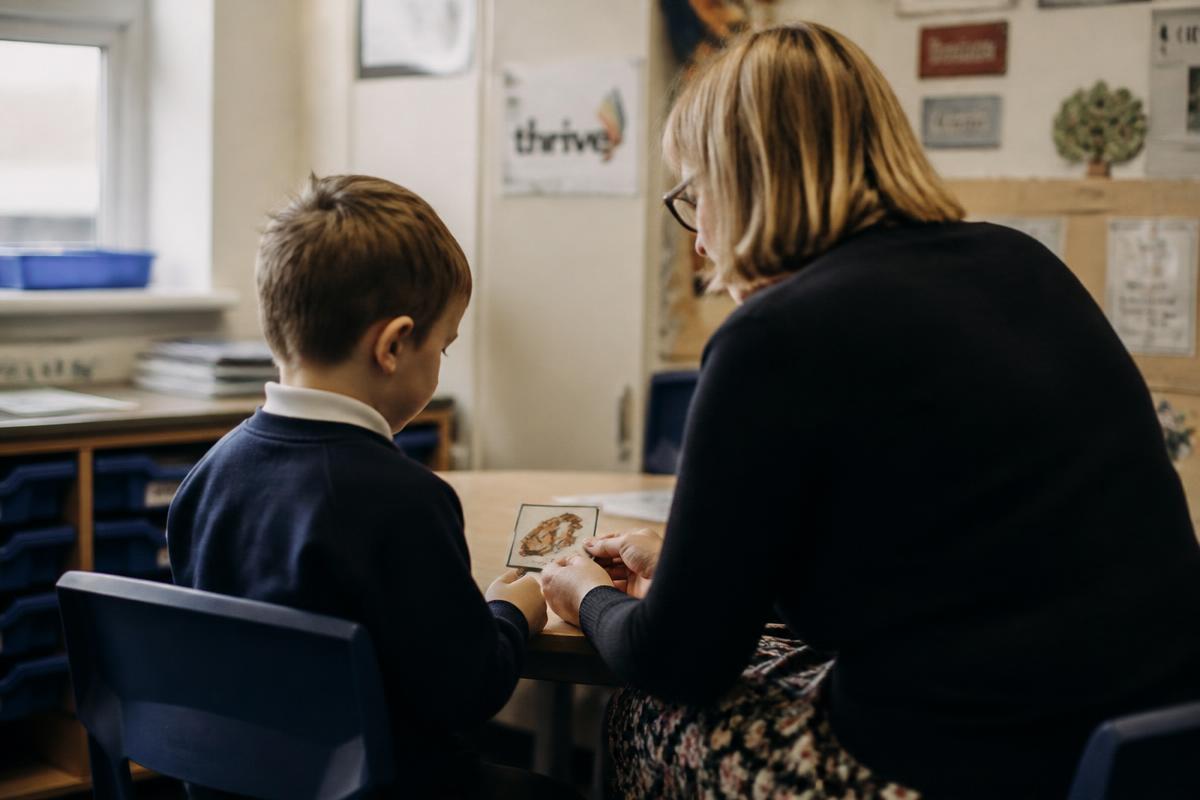
A teacher crouched at eye level beside a young child at a classroom desk, pointing at a small visual card in soft window light.
Evidence guide · 13 min read

Understanding Spoken Language

How children make sense of what adults say — and what we can change about the way we communicate so that more children understand, participate and show what they know.

Explore
A young primary school child talking animatedly to an adult across a classroom table in soft window light.
Evidence guide · 14 min read

Expressive Language

Why this is relevant

Playground talk is fast and unforgiving; language difficulty is often behind social difficulty.

Explore
An adult and a young primary school child sitting side by side over an open picture book in soft window light.
Evidence guide · 14 min read

Vocabulary & Word Knowledge

What it means to really know a word, why word knowledge sits underneath so much classroom learning, and how adults can build it deliberately without turning language into a deficit.

Explore
An adult and a young primary school child sitting side by side at a classroom table, looking together at a small picture card in soft window light.
Evidence guide · 14 min read

Speech Sounds & Speech Clarity

Being hard to understand is not the same as having less to say. What speech sounds are, how clarity develops at different rates, and how to keep a child fully included while it does.

Explore
A quiet primary school book corner with a wooden bench, cushions and a basket of picture books beside a window in soft daylight.
Evidence guide · 15 min read

Emotional Regulation

Why this is relevant

Regulation is learned through relationship; a trusted adult is the mechanism, not the reward.

Explore
A quiet primary school cloakroom with a single coat and book bag on a wooden peg rail in soft morning light.
Evidence guide · 15 min read

Anxiety & Worry

Why this is relevant

Loneliness and social worry are among the most common reasons school starts to feel unsafe.

Explore
A quiet primary classroom carpet area with cushions and a low bookshelf in soft daylight.
Evidence guide · 16 min read

Understanding Behaviour

Why this is relevant

Belonging changes behaviour more reliably than most behaviour systems do.

Explore
An empty primary school desk with a pencil pot and notebook beside a wooden chair with a wobble cushion, in soft morning light.
Evidence guide · 16 min read

ADHD

Attention, impulse and activity are shaped as much by the situation as by the child. This guide looks at what ADHD is, what it is not, and what actually helps in a mainstream primary classroom and at home.

Explore
A quiet corner of a primary classroom with a low wooden shelf of neatly arranged wooden blocks and a folded blanket beside a window.
Evidence guide · 17 min read

Autism

Autism is a difference in how a person communicates, experiences the world and makes sense of it — not a list of deficits. This guide looks at what may be relevant, what the environment contributes, and what genuinely helps in a mainstream primary school.

Explore
An open book resting on a wooden primary school table beside a pencil and reading glasses in soft window light.
Evidence guide · 16 min read

Dyslexia

Dyslexia is about accurate, fluent word reading and spelling — not reversed letters or a visual learning style. This guide separates what is known from what is myth, and sets out the teaching and adjustments that actually help.

Explore
An adult's hand gently holding a young child's hand in soft natural light.
Evidence guide · 13 min read

School Attendance

When getting to school becomes the hardest part of the day. What can sit underneath attendance difficulties, how families and schools can work on it together, and what the guidance actually expects.

Explore
A calm, quiet reading corner in a primary classroom with cushions and soft daylight.
Evidence guide · 11 min read

Transitions

Moving from one thing to the next — between activities, places, people and years. Why change can be so hard for some children, and the calm, predictable preparation that helps.

Explore
Soft natural textures and calm materials arranged in gentle daylight.
Evidence guide · 11 min read

Sensory Needs

Some children experience noise, light, touch, smell or movement more — or less — intensely than others. What that can look like, why it matters for learning and wellbeing, and the calm adjustments that help.

Explore
A tidy wooden desk with a notebook and pencils in soft window light.
Evidence guide · 9 min read

Homework

Making home learning calmer for everyone. What the evidence says about primary homework, why it can be so hard after a long school day, and how families and schools can keep it purposeful rather than painful.

Explore
A parent and child sharing a picture book together in soft, warm light.
Evidence guide · 9 min read

Sleep

Small, steady changes that help a child settle and stay asleep — and why sleep matters so much for learning, mood and coping. Based on NHS advice.

Explore