Skip to content
Evidence Guide
16 min read

Understanding Behaviour

Behaviour is information. This guide looks at what tends to sit underneath it — need, context, relationship, communication, learning — and how to respond in a way that is both understanding and clear.

Reading time
16 min read
Age range
All primary (EYFS–KS2)
Evidence level
Moderate
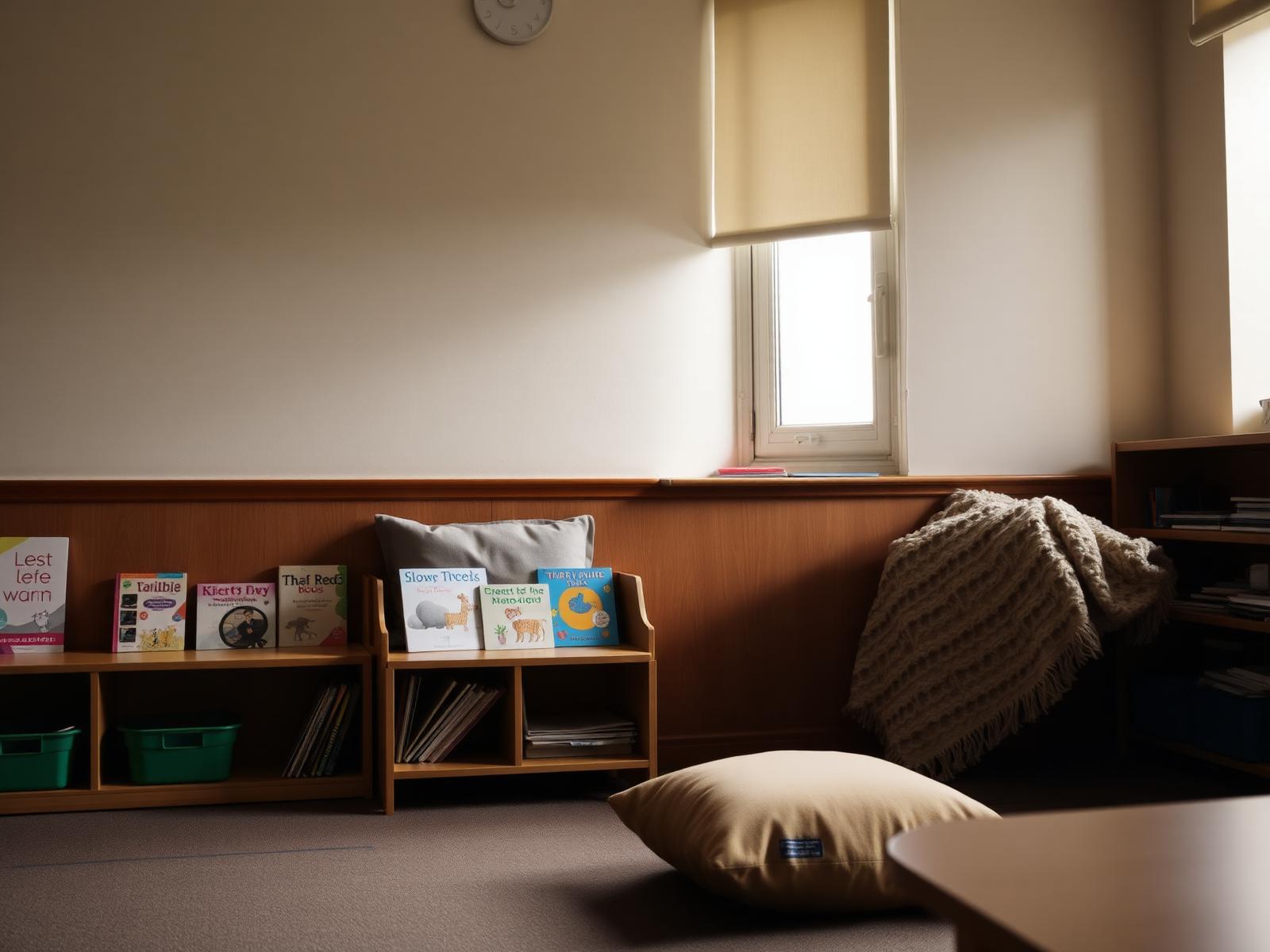
A quiet primary classroom carpet area with cushions and a low bookshelf in soft daylight.
Written for families

Plain English, no jargon. You don't need a teaching background to use this — just read the parts that feel useful and skip the rest. If something raises a question, your child's teacher or SENDCO is the best next step.

MoreFor parents

Behaviour is communication — and it is still behaviour

"Behaviour is communication" is one of the most useful ideas in this area, and one of the most misused. It means that what a child does usually tells you something about what they need, what they can manage, or what has just happened. It does not mean that anything goes, or that boundaries are unkind.

Children generally behave well when they can. When they cannot, something is usually making it harder: tiredness, hunger, worry, an overwhelming environment, a demand beyond what they can currently do, a friendship that went wrong, a change at home, or simply being six. Looking for that is not making excuses — it is how you work out what would actually help.

Warm and clear, not warm or clear

The false choice is between understanding a child and expecting things of them. Children do best with adults who do both: who take the feeling seriously and hold the limit steadily.

OverviewFor parents

What often sits underneath

Capacity in the moment

Tired, hungry, ill, overloaded, at the end of a long school day. The same child manages the same request very differently at 8am and 5pm.

Something they cannot yet do

Waiting, losing, sharing, switching activity, coping with 'no', holding a plan in mind. These are skills that develop, at different rates, and they can be taught.

Feelings with no words yet

Worry, embarrassment, jealousy, grief and shame often arrive as anger or silliness in primary-aged children, because those are the routes available.

Communication difficulty

A child who cannot follow long instructions or find the words they need may look defiant. Difficulties with understanding or expressing language frequently show up first as behaviour.

The environment

Noise, crowding, unpredictability, transitions, too much waiting. Some children are markedly more affected by these than others.

The learning

Work that is too hard, too long, or too unclear reliably produces avoidance — messing about is often easier than being seen not to know.

What has just happened

The lunchtime fall-out, the lost book, the change of teacher, the argument in the car. Behaviour at 3.30pm is often about 12.30pm.

It is rarely one thing

Most difficult behaviour has several contributing factors at once, and the biggest one is not always the most visible. Being curious for a week beats deciding on day one.

MoreFor parents

The pattern most families recognise

Many children hold themselves together all day at school and let go at home. Parents describe glowing reports and impossible evenings, and are sometimes told it must be something they are doing. Usually it means the school day is costing more than it appears, and home is the safe place to release it.

It is worth telling school this is happening, even if — especially if — they see nothing. It is not a complaint; it is the piece of information they do not have.

OverviewFor parents

What helps at home

Predictable routines

What it is: mornings, homework, mealtimes and bedtimes that run roughly the same way. Why: predictability removes dozens of small negotiations a day, which is where most flashpoints live.

Notice the times, not just the incidents

What it is: keeping a rough note of when things go wrong for a fortnight. Why: patterns — after school, before maths homework, at transitions, when a sibling is around — point at causes that a single incident never will.

Fewer, clearer expectations

What it is: a small number of things that always apply, stated plainly. Why: children can meet clear expectations; they cannot meet a shifting list.

Say what to do, not what to stop

What it is: "Walking feet", "Shoes on the rack", rather than "Stop running", "Don't leave those there". Why: it is easier to follow, and it is less confrontational.

Wait until the storm passes

What it is: keeping everyone safe and saying very little in the middle of it; the conversation happens later, when they can think. Why: nobody learns anything at the peak of a big feeling.

Repair afterwards

What it is: coming back, briefly and without a lecture — what happened, what we could try, and that you are still fine with each other. Why: repair is where the learning actually happens, and it protects the relationship.

Separate the child from the behaviour

What it is: "That was not okay" rather than "You are naughty". Why: children who come to believe they are the problem stop trying.

Catch what goes right

What it is: brief, specific, ordinary acknowledgement — "You waited then, that was hard." Why: it is the cheapest and most reliably effective thing on this list, and it is the first thing to disappear when a family is exhausted.

MoreFor parents

Consequences that actually teach

Consequences work best when they are small, immediate, related to what happened, and delivered calmly. Escalating punishments tend to produce escalating behaviour, and a consequence given in anger usually teaches the child about your feelings rather than their choices.

  • Small and soon beats big and later.
  • Related to what happened where possible — help clear it up, fix it, or wait to try again.
  • Predictable, so it is not a surprise.
  • Followed by repair, not by a long silence.
  • Never a withdrawal of warmth or belonging.
Support at homeFor parents

Things to avoid

  • Long explanations while your child is still overwhelmed.
  • Threats you will not carry out.
  • Public telling-off, which adds shame to whatever was already happening.
  • Removing something they need — sleep, food, connection, the activity that regulates them.
  • Assuming behaviour is deliberate manipulation; it very rarely is at primary age.
  • Trying to fix everything at once. Pick the one thing that matters most this month.
MoreFor parents

When to seek more advice

  • The same difficulty across home, school and elsewhere, over months.
  • Anyone's safety is at risk.
  • A sudden, marked change in a child who was previously settled.
  • Behaviour alongside worries about learning, language, attention or sensory experience.
  • You are exhausted, or family life is organised around avoiding a flashpoint.

Start with the class teacher and the school's SENDCO. A GP can advise where there are health concerns or a possible underlying difficulty. Many local authorities offer parenting or early help support — asking for it is a reasonable thing to do, not an admission of failure.

ResearchFor parents

Evidence & sources

What this guide is, and is not

Understanding why a child behaves as they do does not mean removing expectations. This guide is about looking for what is underneath behaviour while still holding clear, kind boundaries — both, not one instead of the other. It is educational, not clinical, and it cannot tell you the cause of any individual child's behaviour.

  1. Department for EducationProfessional guidance
    Behaviour in schools: advice for headteachers and school staff (2024)

    The current DfE frame: clear routines and consistently applied expectations, alongside reasonable adjustments for pupils with SEND and consideration of whether unmet needs are driving behaviour.

  2. Department for EducationStatutory guidance
    SEND Code of Practice: 0 to 25 years (2015)

    States that behaviour is not itself a category of special educational need — where a child's behaviour is a concern, an underlying need should be looked for.

  3. Department for EducationProfessional guidance
    Mental health and behaviour in schools (2018)

    Non-statutory advice on recognising when behaviour reflects an underlying mental health or SEMH need, and where school support ends.

  4. Education Endowment FoundationResearch summary
    Improving Behaviour in Schools — guidance report (2019, updated 2021)

    Six recommendations, including knowing pupils and their influences, teaching routines explicitly, and using targeted approaches for the small number who need them.

  5. Education Endowment FoundationResearch summary
    Behaviour interventions — Teaching and Learning Toolkit

    Rated by the EEF as moderate impact for very low cost, on extensive evidence — with a strong caution that effects vary widely and depend on implementation.

  6. Education Endowment FoundationResearch summary
    Special Educational Needs in Mainstream Schools — guidance report (2020, updated 2021)

    Sets out the 'five-a-day' teaching approaches and argues that high-quality teaching for all is the first response to additional need, including SEMH need.

  7. Education Endowment FoundationResearch summary
    Improving Social and Emotional Learning in Primary Schools — guidance report (2019, updated 2021)

    Explicit teaching of social and emotional skills, reinforced across the day, is where much of the classroom behaviour evidence and the SEMH evidence overlap.

  8. Education Endowment FoundationResearch summary
    Putting Evidence to Work: A School's Guide to Implementation (2019, updated 2024)

    Why behaviour approaches most often fail: adopted broadly, delivered thinly, never reviewed.

  9. National Institute for Health and Care ExcellenceProfessional guidance
    Social, emotional and mental wellbeing in primary and secondary education (NG223) (2022)

    Whole-school approach, trusted relationships, and targeted support — the wellbeing counterpart to the behaviour guidance.

  10. Department for EducationStatutory guidance
    Keeping children safe in education

    A change in behaviour can be an indicator of a safeguarding concern. Any behaviour discussion must sit inside this duty.

  11. Anna FreudProfessional guidance
    Mentally Healthy Schools

    Quality-assured UK material on the relationship between behaviour, emotional need and school practice.

Supporting School
Curious how school approaches understanding behaviour?

The professional Evidence Library shows the same ideas written for teachers, SENDCOs and school leaders.

Open the Evidence Library
Continue exploring

Where to go next.

A calm handful of next steps — not a checklist. Follow whichever thread is most useful right now.

For the classroom

What school is doing.

See the same evidence translated for teachers, so home and school can pull in the same direction.

Same category

More in Social, Emotional & Mental Health.

Emotional wellbeing, relationships, regulation, anxiety, trauma and belonging.

You may also find these helpful

Related Evidence Guides

Each guide below connects to the one you've just read. We've noted why — so you can follow the thread that matters most to you.

A stack of well-loved picture books beside a notebook on a wooden desk in soft window light.
Evidence guide · 12 min read

Working Memory

Why this is relevant

Forgotten instructions are frequently recorded as not listening; worth ruling out before anything else.

Explore
A pegboard on a classroom wall with wooden name tags in warm afternoon light.
Evidence guide · 14 min read

Executive Function

Why this is relevant

Waiting, stopping and switching are executive skills that develop unevenly and can be taught.

Explore
An open book and pencil on a classroom desk lit by low morning sunlight through a window.
Evidence guide · 11 min read

Attention

What we mean by attention, why it wanders, and the classroom conditions that help it hold.

Explore
A quiet primary classroom corner with soft natural light, uncluttered surfaces and calm materials.
Evidence guide · 11 min read

Cognitive Load

How lesson design shapes what a working memory can carry — and the small design choices that free up thinking for learning.

Explore
A child's small hands holding an autumn maple leaf in soft window light.
Evidence guide · 10 min read

Processing Speed

The pace at which a child takes in, makes sense of and responds to information — and why slower doesn't mean less capable.

Explore
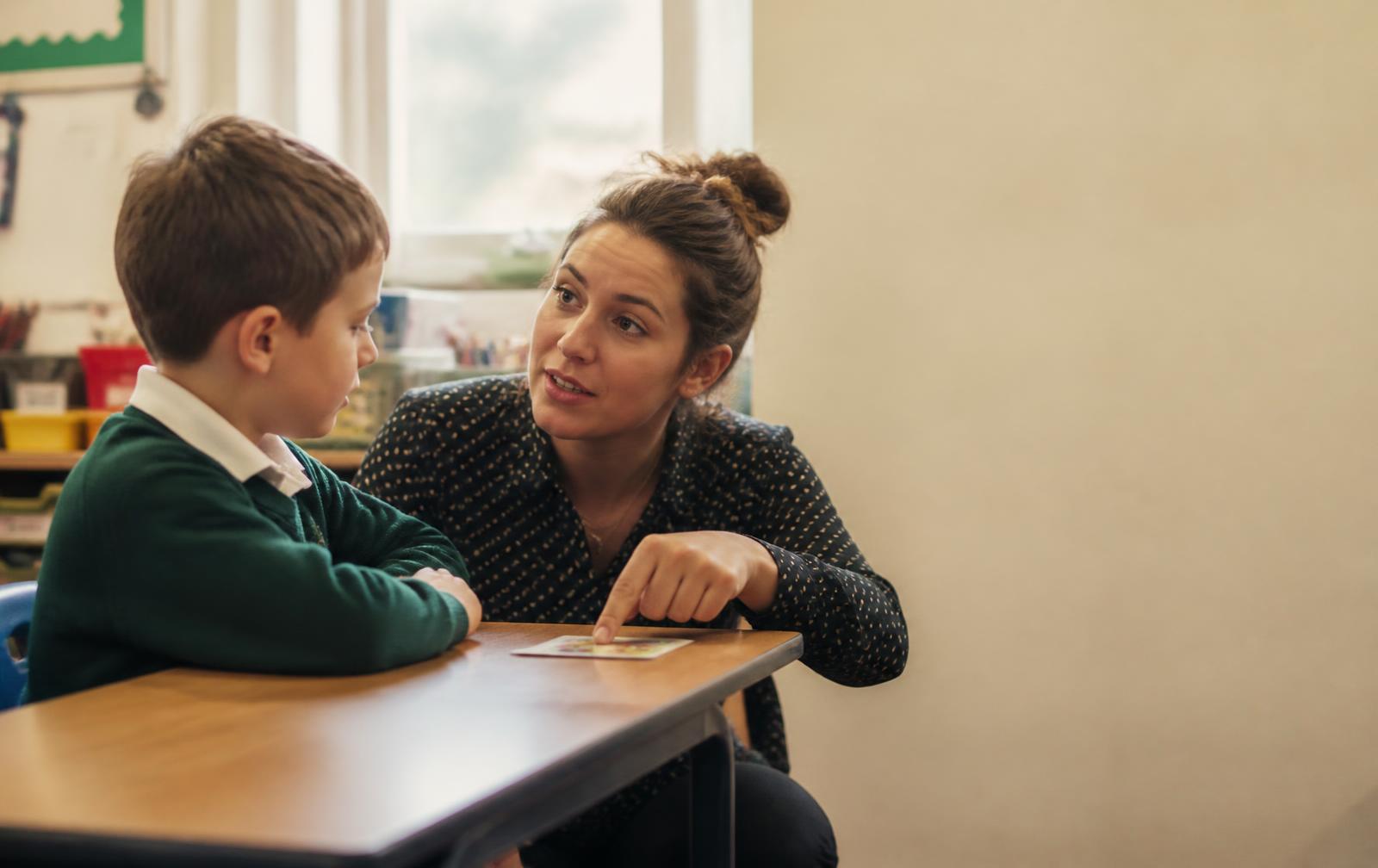
A teacher crouched at eye level beside a young child at a classroom desk, pointing at a small visual card in soft window light.
Evidence guide · 13 min read

Understanding Spoken Language

Why this is relevant

A child who cannot follow long instructions can look non-compliant when the barrier is comprehension.

Explore
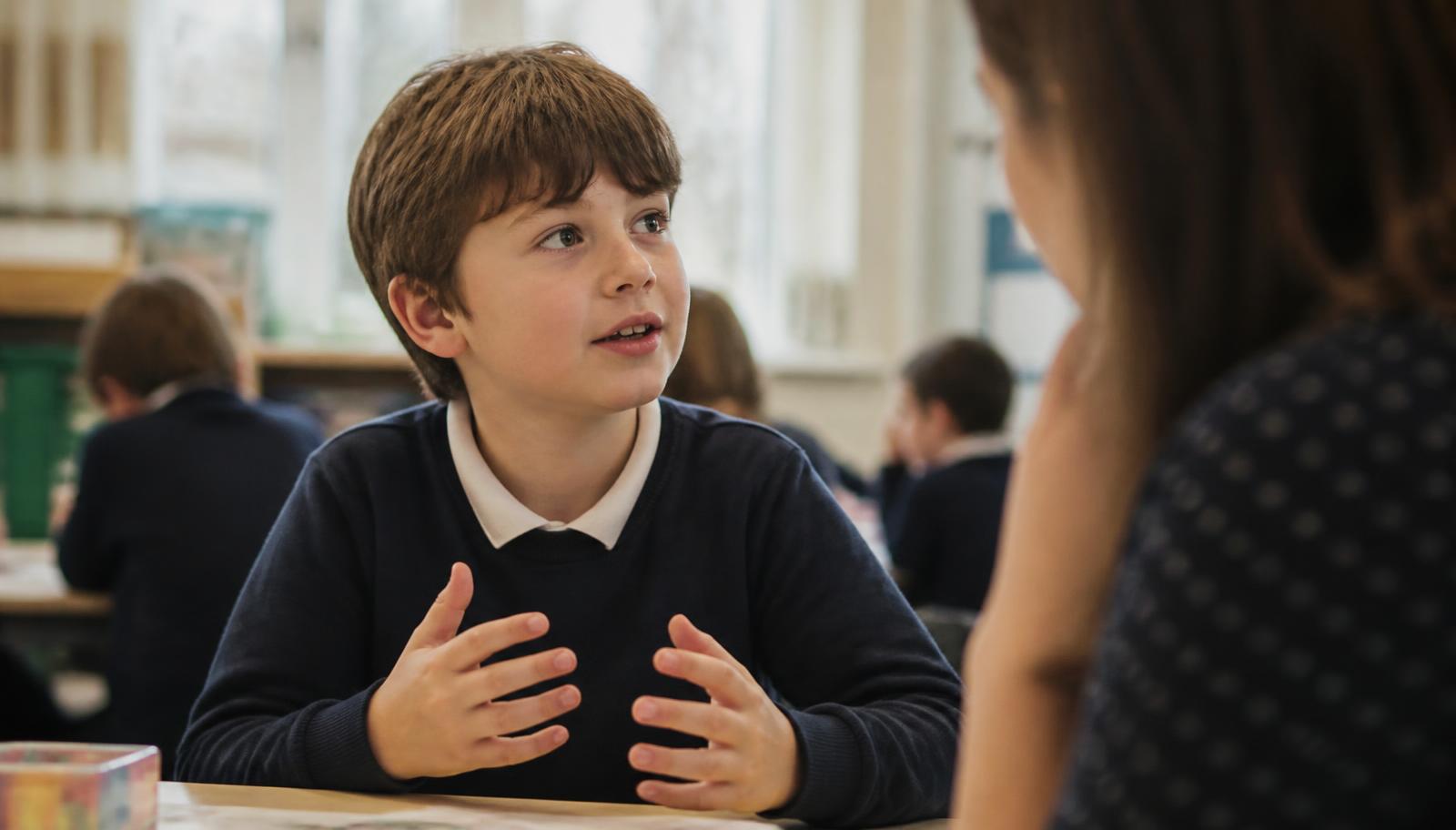
A young primary school child talking animatedly to an adult across a classroom table in soft window light.
Evidence guide · 14 min read

Expressive Language

Why this is relevant

When words are hard to find, behaviour often carries the message instead.

Explore
An adult and a young primary school child sitting side by side over an open picture book in soft window light.
Evidence guide · 14 min read

Vocabulary & Word Knowledge

What it means to really know a word, why word knowledge sits underneath so much classroom learning, and how adults can build it deliberately without turning language into a deficit.

Explore
An adult and a young primary school child sitting side by side at a classroom table, looking together at a small picture card in soft window light.
Evidence guide · 14 min read

Speech Sounds & Speech Clarity

Being hard to understand is not the same as having less to say. What speech sounds are, how clarity develops at different rates, and how to keep a child fully included while it does.

Explore
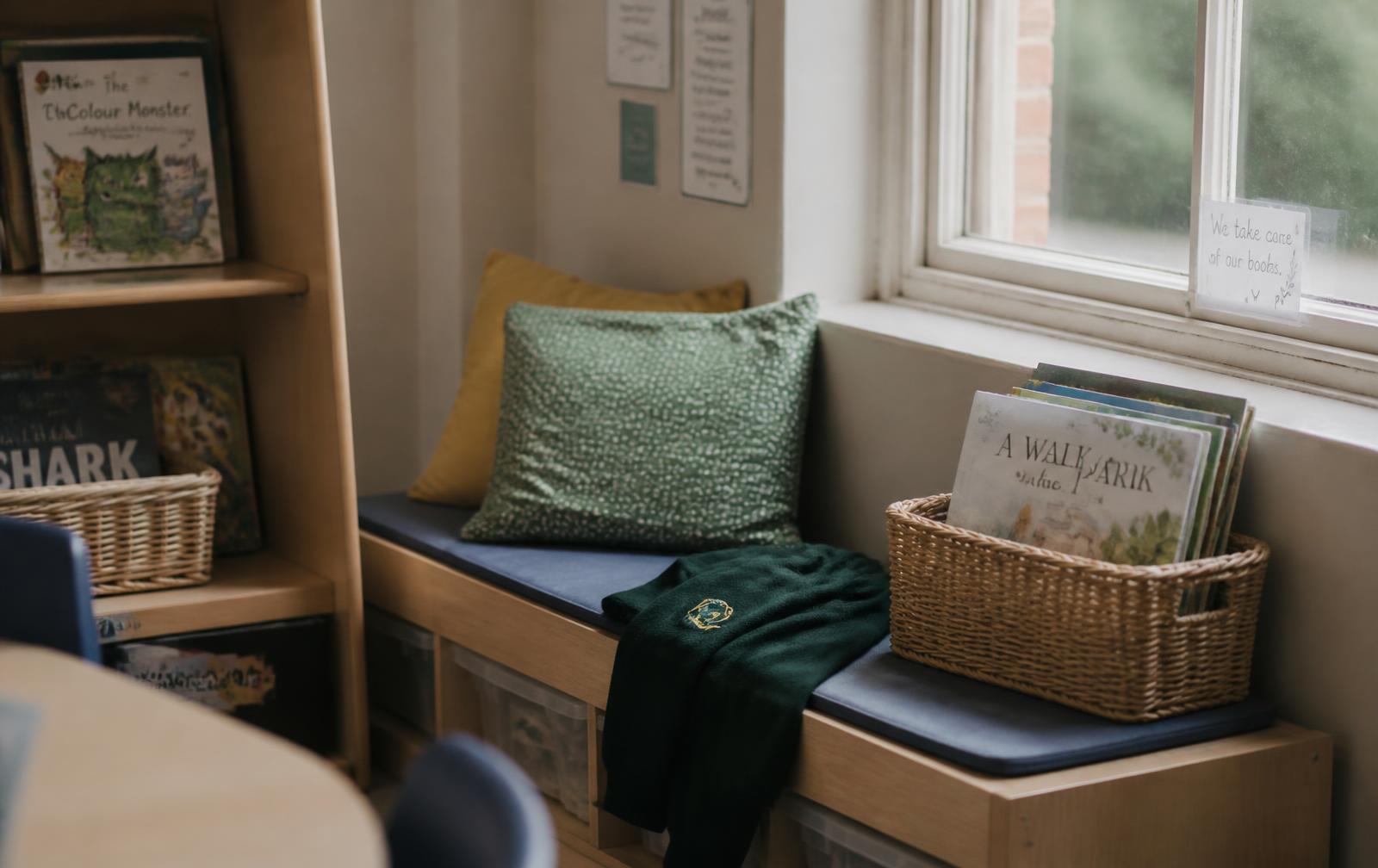
A quiet primary school book corner with a wooden bench, cushions and a basket of picture books beside a window in soft daylight.
Evidence guide · 15 min read

Emotional Regulation

Why this is relevant

Much difficult behaviour is a feeling arriving faster than the skills to handle it.

Explore
A quiet primary school cloakroom with a single coat and book bag on a wooden peg rail in soft morning light.
Evidence guide · 15 min read

Anxiety & Worry

Why this is relevant

Refusal and avoidance are frequently anxiety in a form that looks like defiance.

Explore
An empty wooden bench beside a primary school playground with a faded chalk hopscotch grid and autumn leaves.
Evidence guide · 15 min read

Relationships & Belonging

Why this is relevant

Children behave differently for adults who know them; relationship is part of the behaviour picture, not separate from it.

Explore
An empty primary school desk with a pencil pot and notebook beside a wooden chair with a wobble cushion, in soft morning light.
Evidence guide · 16 min read

ADHD

Attention, impulse and activity are shaped as much by the situation as by the child. This guide looks at what ADHD is, what it is not, and what actually helps in a mainstream primary classroom and at home.

Explore
A quiet corner of a primary classroom with a low wooden shelf of neatly arranged wooden blocks and a folded blanket beside a window.
Evidence guide · 17 min read

Autism

Autism is a difference in how a person communicates, experiences the world and makes sense of it — not a list of deficits. This guide looks at what may be relevant, what the environment contributes, and what genuinely helps in a mainstream primary school.

Explore
An open book resting on a wooden primary school table beside a pencil and reading glasses in soft window light.
Evidence guide · 16 min read

Dyslexia

Dyslexia is about accurate, fluent word reading and spelling — not reversed letters or a visual learning style. This guide separates what is known from what is myth, and sets out the teaching and adjustments that actually help.

Explore
An adult's hand gently holding a young child's hand in soft natural light.
Evidence guide · 13 min read

School Attendance

When getting to school becomes the hardest part of the day. What can sit underneath attendance difficulties, how families and schools can work on it together, and what the guidance actually expects.

Explore
A calm, quiet reading corner in a primary classroom with cushions and soft daylight.
Evidence guide · 11 min read

Transitions

Moving from one thing to the next — between activities, places, people and years. Why change can be so hard for some children, and the calm, predictable preparation that helps.

Explore
Soft natural textures and calm materials arranged in gentle daylight.
Evidence guide · 11 min read

Sensory Needs

Some children experience noise, light, touch, smell or movement more — or less — intensely than others. What that can look like, why it matters for learning and wellbeing, and the calm adjustments that help.

Explore
A tidy wooden desk with a notebook and pencils in soft window light.
Evidence guide · 9 min read

Homework

Making home learning calmer for everyone. What the evidence says about primary homework, why it can be so hard after a long school day, and how families and schools can keep it purposeful rather than painful.

Explore
A parent and child sharing a picture book together in soft, warm light.
Evidence guide · 9 min read

Sleep

Small, steady changes that help a child settle and stay asleep — and why sleep matters so much for learning, mood and coping. Based on NHS advice.

Explore